
The Lens of Survivorship
Surviving cancer and learning how to live after cancer are two very different journeys.
By; Aryana Hadjimohammadi
Introduction
Lori Prashker-Thomas knows this truth intimately. She has lived it. She has walked through the fear of diagnosis without health insurance, the uncertainty of treatment, the physical and emotional changes that cancer leaves behind, and the quiet, ongoing work of learning to recognize herself again.
But she also knows something else. She knows that sometimes; it takes a single moment—a single photograph—to help a person see what has been there all along.
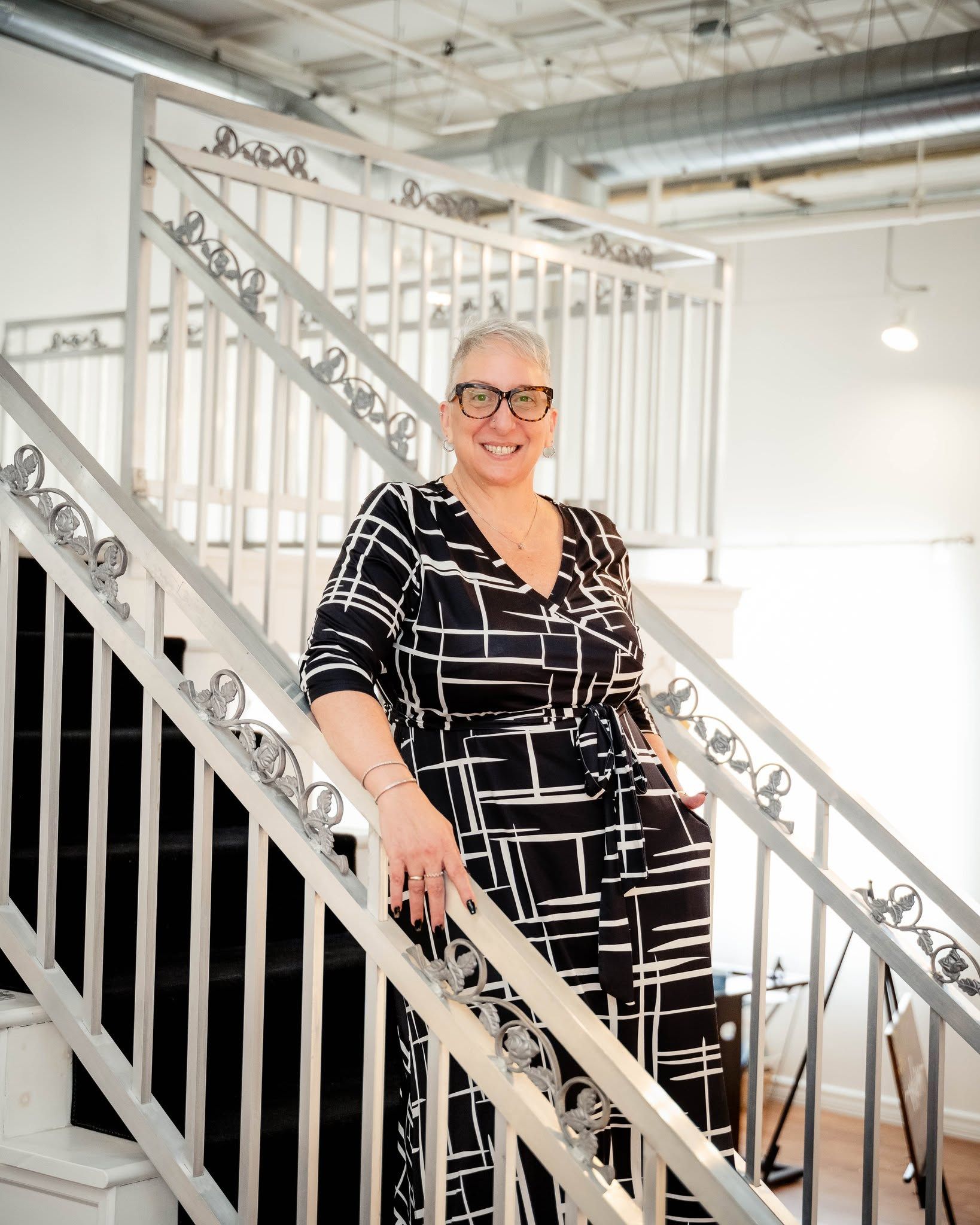
Today, Prashker-Thomas wears many hats. She is a paralegal by day at Lehman Law, PC. She is also co-owner with her husband Michael at ShadowCatcher Photography, LLC, owner of Ceremonies By Lori where she serves as an ordained officiant, and the Director of I Picture Hope—a nonprofit that offers free portrait experiences to cancer survivors.
Her journey from cancer patient to photographer to nonprofit director wasn't a straight line. It was shaped by fear, faith, questions, and a husband who kept telling her she was beautiful even when she couldn't see it herself.
This is her story.
The Diagnosis: When Fear Meets Financial Reality
Prashker-Thomas's cancer journey didn't start in a hospital room with a doctor delivering a diagnosis. It started in an OB/GYN's office during a routine appointment.
Something was discovered that needed further evaluation. But at the time, she didn't have health insurance.
"That was incredibly scary," she recalls. "You're already dealing with the fear of, 'What if this is cancer?' and then you add another layer of, 'How am I even going to find out? How am I going to pay for this?'"
The fear of the disease itself was compounded by the fear of being unable to access the care she needed. It's a reality that far too many people face.
"Cancer is frightening enough on its own," she said. "No one should also have to wonder whether having insurance—or not having it—is going to determine whether they can get the care that could save their life."
Eventually, she was accepted into a trial program that incorporated medication alongside Eastern medicine. It wasn't the traditional path many people think of when they hear "breast cancer treatment," but it opened the door to the care and testing she desperately needed.
Ultimately, she was diagnosed with breast cancer.
What she remembers most vividly from that time wasn't just hearing the word "cancer." It was the uncertainty surrounding everything. The diagnosis. What was going to happen next. Whether she was even going to be able to get the care she needed.
Treatment and the Unspoken Realities of Survivorship
Going through treatment brought a flood of emotions. Fear, of course. So many unknowns.
But Prashker-Thomas also describes a kind of survival mode that took over.
"You do what you have to do," she explains. "You get up, you show up, you take the medication, you go to the appointments, and you keep moving forward—even on the days when you aren't quite sure where you're finding the strength to do it."
The experience changed her. It made her realize just how quickly life can change. One day you're going about your normal life, and suddenly you're a cancer patient, and your world revolves around appointments, treatments, and wondering what comes next.
It also gave her a much deeper understanding of what it means to simply survive.
"Survival isn't always this big, inspirational thing," Praskher-Thomas said. "Sometimes surviving means getting through that day. And then getting through the next one."
When treatment ended, Prashker-Thomas thought she'd feel relief. And she did. But something else surfaced, too.
"I don't think I was prepared for survivorship at all," she admits. "During treatment, you have a goal in front of you—you just keep moving forward and doing what you need to do. Then treatment ends, and everyone expects you to be happy because you're done. You're a survivor. You're supposed to go back to your life."
But as she learned, you don't necessarily go back to the person you were before cancer.
"Every ache or pain can make you wonder. Every follow-up appointment can bring some of that fear back. And your body may be different. You may be different."
She reflects on a truth that survivorship often overlooks.
"We talk a lot about fighting cancer and getting through treatment, but not nearly enough about what happens afterward and how you learn to live again."
For Prashker-Thomas, survivorship became less about getting her old life back and more about figuring out who she was now.
"And eventually understanding that surviving cancer was going to become part of my story, but it didn't have to define my entire story."
Lymphedema: The Unseen Burden of Survivorship
As Prashker-Thomas navigated life after treatment, she discovered that cancer had left behind more than just memories. Her lymphedema developed after her cancer treatment, primarily in her arm and hand. In some ways, it became another reminder that even though treatment was over, cancer wasn't finished affecting her life.
"Lymphedema isn't something you simply treat once and then it's gone," she explains. "It becomes part of your everyday life. You have to pay attention to your body, recognize when the swelling is getting worse, and use things like compression garments to help manage it."
She describes what it feels like to live with this condition.
"There can be heaviness, discomfort and changes in how your body looks and feels. Then there is the constant awareness that you need to take care of that part of your body."
She also emphasizes that compression garments are not optional.
"They aren't a fashion accessory or something you wear because you want to," Prashker-Thomas said. "They are part of managing lymphedema—and they can be expensive, especially when insurance doesn't adequately cover what you need."
"Most importantly, I wish people understood that cancer treatment ending doesn't always mean the effects of cancer end," she said. "Lymphedema is something I continue to live with. It's one of those parts of survivorship that isn't talked about nearly enough."
When You Don't Recognize Yourself
Cancer changes your body. It changes your skin, your hair, your shape. And for Prashker-Thomas, those physical changes created a deep fracture in her sense of identity.
"When I looked in the mirror, the woman looking back at me didn't always feel like the woman I had known before cancer," she said.
With breast cancer, there is another layer. So much of how society defines femininity is connected to our bodies—our breasts, our hair, our appearance. Suddenly, things she had probably taken for granted about herself were different.
"It wasn't simply about whether I thought I looked good or didn't look good," Prashker-Thomas explains. "It went much deeper than that. It was about learning how to exist in a body that had been through something incredibly difficult and realizing that this was my body now."
She continues.
"Cancer changes your identity in ways people don't always see. You may survive the disease, but then you have to figure out how to accept all of the changes it left behind."
For Prashker-Thomas, the shift didn't happen overnight.
"I had to learn to stop looking at myself and only seeing what cancer had changed or taken from me."
Photography became an important part of that journey. Being behind the camera and eventually photographing other survivors helped her understand something she had a much harder time seeing in herself.
"Eventually, I began to look at myself differently too," she said. "Instead of seeing a body that cancer had changed, I started seeing a woman whose body had carried her through cancer and was still here."
The Power of a Single Photograph
Prashker-Thomas was already a photographer when she was diagnosed with breast cancer. But cancer completely changed what photography would eventually mean to her.
As she went through treatment, her husband Michael kept asking if he could photograph her. He saw her beauty, even when she couldn't. And for a long time, she said no.
Then one day, she came home from work and said, "Okay. Let's do this photo."
They did. And to this day, it is one of her favorite photographs of herself.
"There was something about seeing that photograph that allowed me to see myself differently," she reflects. "For that moment, I wasn't looking at everything cancer had changed. I wasn't looking at my hair, my body, my skin or all the things I had been struggling with. I saw myself."
That single photograph became the seed of something much larger.
"And I remember thinking, 'If one photograph can make me feel this good about myself, how can I use photography to help someone else feel this way?'"
That moment led her to start researching. That's when she found I Picture Hope. At the time, the organization had been started by someone honoring their mother's breast cancer journey. It immediately connected with Prashker-Thomas because she understood firsthand what it felt like to lose a piece of yourself during cancer—and what it could mean to see yourself again.
"Photography could be about much more than creating beautiful images," she said. "It could help someone reclaim a little piece of themselves that cancer had taken away."
Reclaiming Beauty Through the Lens
Today, I Picture Hope offers free portrait experiences to cancer fighters and survivors. The portrait experiences have evolved over time. Prashker-Thomas and her team recognized that showing up for a photo shoot can feel like yet another appointment. Another moment where you're being examined or measured. They wanted it to feel completely different.
So now, they make it a party.
"We have music. We have a DJ. We laugh. We talk. We eat. We try to take away that pressure of, 'Okay, now I have to pose and look beautiful.'"
And somewhere in the middle of all of that, something changes.
"They start relaxing. They start laughing. Sometimes they forget the camera is even there."
Those are the moments she loves capturing.
When a survivor sees her portrait for the first time, Prashker-Thomas has a hope for what she'll see.
"I hope she sees herself. Not the cancer. Not the scars. Not the hair she lost or the weight she gained or lost. Not the changes cancer made to her body. I want her to see the woman who is still there underneath all of that."
She adds.
"I hope she sees strength, but I also don't want to put pressure on every survivor to always be 'strong.' Cancer is hard. There are days when you don't feel strong at all, and that's okay."
"More than anything, I want her to look at that photograph and feel beautiful,” Praskher-Thomas said. “I want her to recognize herself again—even if the woman she sees is a little different from the woman she was before cancer."
A Partnership Born from Understanding
Prashker-Thomas and Dr. Sheri Prentiss actually met through Vivian L. Vega, the Director of Breast Friends of Pennsylvania. Prashker-Thomas was connected with the organization during her cancer journey.
At the time, she was struggling with lymphedema. One of the biggest issues was something that sounds very simple until you're the person living it. She couldn't afford the compression garments she needed.
Vivian knew what Prashker-Thomas was dealing with and suggested she reach out for help. That was the introduction that connected her with Dr. Sheri.
"That introduction became much more than simply connecting me with someone who might be able to help me get compression garments," Prashker-Thomas explains. "Dr. Sheri understood that survivorship doesn't end when cancer treatment ends. There are things, like lymphedema, that you may continue dealing with every single day."
Through the LIVE Today Foundation, Prashker-Thomas was able to obtain the compression garments she needed. And the experience stayed with her in ways that went beyond the physical relief.
"The compression garments were important, but feeling understood was just as important," she said.
"One of the difficult things about survivorship is that once treatment ends, there can be an expectation that you're finished—that cancer is behind you and you simply move on,” she said. “But for many of us, there are things we continue to live with long after treatment ends."
"Having an organization like LIVE Today understand that without me having to explain or justify it made a tremendous difference. They understood that compression garments weren't something I simply wanted—they were something I needed to help manage a condition I live with every day."
She reflects on the powerful moment of being seen.
"There is something powerful about having someone say, in their own way, 'We see you. We understand that this is still part of your life, and we're here to help.'"
Prashker-Thomas acknowledges that being on the receiving end of help wasn't always easy for her.
"I'm someone who is much more comfortable being the person helping someone else, so being on the receiving end isn't always easy for me.” Praskher-Thomas said.
"But that experience taught me something important about accepting help, too. Sometimes we all need someone to step in and say, 'We see what you're going through, and we're here to help.'"
LIVE Today did that for her.
"And I haven't forgotten it."
Their connection has continued to grow. Over the years, Dr. Sheri was invited to attend one of I Picture Hope's events. And this time, Dr. Sheri stepped in front of the camera and was photographed. It was a full-circle moment. Their relationship had started with Prashker-Thomas being the person who needed help. Now she had the opportunity, through I Picture Hope, to give something back.
"We share this understanding that cancer care has to be about more than treating the disease," she said. "It's also about caring for the person who is living with everything that comes afterward."
Faith, Questions, and Purpose
Cancer changed Prashker-Thomas's faith. But maybe not in the way people would expect.
"It didn't suddenly give me all the answers. If anything, it gave me more questions,” she said.”
There were times when she wondered, "Why me?" But over time, that question started to change. Instead of only asking why this happened to her, she began asking, "What can I do with what I've been through?"
Her faith taught her that we aren't necessarily given an explanation for everything that happens in our lives. But we can choose what we do with those experiences.
For Prashker-Thomas, that became service.
"I couldn't change the fact that I had breast cancer. I couldn't change what it did to my body or erase everything that came with it. But I could take that experience and use it to understand someone else a little better. I could pick up my camera and help another survivor see herself differently. I could listen. I could show up. I could remind someone that she is more than a diagnosis."
She speaks honestly about the relationship between her experience and her purpose.
"I don't believe I had cancer because I was supposed to start I Picture Hope. But I do believe I had a choice about what I did with my experience afterward."
"And I chose to turn some of the hardest parts of my own story into a way of giving something back to someone else."
"That, for me, is where faith and purpose meet."
Redefining Beauty
Photographing other survivors has completely changed Prashker-Thomas's definition of beauty.
As a photographer, she used to think about things like lighting, posing, expression, and creating a beautiful image. She still thinks about those things, of course. But she has learned that the most beautiful photographs aren't necessarily the most perfect ones.
"They're the ones where I can see the person coming through."
She has photographed people who were nervous, people whose bodies had changed, people who didn't feel beautiful anymore, people who simply weren't sure what they were going to see when they saw their photograph. And through all of them, she's learned something profound.
"Reclaiming yourself after cancer doesn't mean trying to become exactly who you were before your diagnosis," she said. "Cancer changes you. Sometimes it changes your body. Sometimes it changes the way you think. Sometimes it changes what matters to you. Reclaiming yourself is about being able to look at who you are now and say, 'This is me, too.'"
"Beauty isn't about pretending the scars, changes or difficult parts of the journey aren't there. It's about seeing the whole person."
She reflects on the gift that her husband gave her with that single photograph.
"Every time I photograph another survivor, I'm reminded of what Michael helped me see in that photograph of myself years ago: there is still beauty there. Sometimes we just need someone else to help us see it."
A Message to Survivors
When asked what she would say to a woman who has finished cancer treatment but doesn't yet feel like herself again, Prashker-Thomas's answer is full of grace.
"I would tell her to give herself grace."
"There is so much emphasis on getting through cancer treatment. You ring the bell, you finish the medication, you hear the word 'survivor,' and everyone wants to celebrate—and you should celebrate. But that doesn't necessarily mean you wake up the next morning feeling like the person you were before cancer."
And that's okay.
"Your body may be different. Your hair may be different. Your skin may be different. You may have scars. You may be living with something like lymphedema. And emotionally, you may be different too."
"You don't have to rush to find the woman you were before cancer, because the truth is, you may not be that same woman anymore. Take the time to get to know the woman you are now."
She acknowledges there will be days when you look in the mirror and struggle with what you see. She's had those days. There may also be days when you are scared, angry, grateful, happy and exhausted—all at the same time.
"There is no right way to be a survivor."
But she offers this hope.
"Please don't let cancer convince you that it took away who you are. You're still there. Sometimes it takes time to see her again. Sometimes it takes the people who love you reminding you. And sometimes, as it did for me, it might even take a photograph."
"You survived cancer. Now give yourself permission to figure out what living after cancer looks like for you."
To the Woman She Used to Be
Looking back at the woman she was when she first heard "You have cancer," Prashker-Thomas imagines what she would tell her.
"I think I would look at her and say, 'You have absolutely no idea where this journey is going to take you.'"
She would tell her that she's going to be scared. She's going to wonder how she's going to get the care she needs because she doesn't have insurance. She's going to watch her hair change, her skin change, and her body change. She's going to look in the mirror some days and not completely recognize the woman looking back at her.
"And I would tell her that it's okay to be afraid."
She wouldn't tell her, "You're going to be strong," because there will be days when she won't feel strong at all. She would tell her, "Just keep going."
Because one day, Michael is going to keep telling her she's beautiful—hair, no hair, fat, skinny—and she's finally going to let him take that photograph. And that one photograph is going to change something.
She doesn't know yet about I Picture Hope. She doesn't know that someday the portrait experiences will evolve into parties with music and DJs because they want people to feel celebrated instead of uncomfortable.
She doesn't know that some of the things she's struggling with—including lymphedema—will eventually help her understand and connect with other survivors in a completely different way.
"Most of all, I would tell her, 'Cancer is going to become part of your story, but it is never going to be your whole story,'" she reflects.
"And then I think I would tell her the same thing that Michael kept telling me all those years ago: 'You're still beautiful. You're still you. You just can't see her yet,'" she adds.
"And maybe that's what this entire journey has ultimately been about—learning to see her again and then using my camera to help someone else see herself too."
Resources
LIVE Today Foundation
A nonprofit organization whose mission is to provide free compression garments to patients and survivors with lymphedema who cannot afford them. Founded by Dr. Sheri Prentiss, a board-certified physician and breast cancer survivor living with lymphedema.
Website:
www.livetoday.org
I Picture Hope
A nonprofit organization offering free portrait experiences to cancer fighters and survivors, complete with hair styling and makeup, to help them rebuild confidence and see their beauty again.
Website:
ipicturehope.org
ShadowCatcher Photography, LLC
Lori Prashker-Thomas's photography business, co-owned with her husband Michael.
Website:
shadowcatcherphotography.com
Ceremonies By Lori
Prashker-Thomas's wedding officiant and ceremony services business.
Website:
ceremoniesbylori.com